

NRC-H hose clamps have been specially developed for applications with micro-vibrations. They are particularly suitable for multi-spiral hoses where the hose jacket can be damaged by the smallest relative movements. The special design supports low-vibration guidance and can help to extend the service life of the hose line.
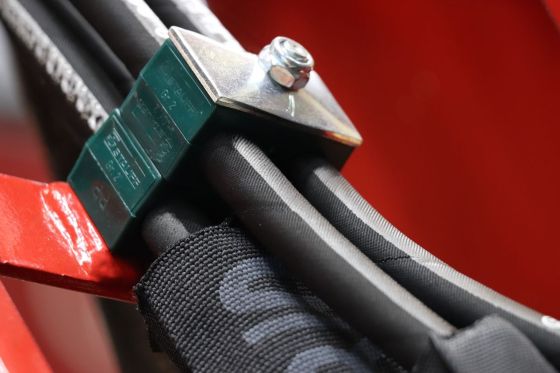
Discover our wide range of hose clamps and their properties
Table of contents
- Introduction to hose clamps
- Our first choice: Hose clamps from the standard series (H version)
- Selecting the right clamp body for hose lines
- Assembly and accessories for hose clamps
- Areas of application for STAUFF hose clamps
- Other hose clamps in our range - an overview
- Helpful links and information
- Buy hose clamps now
- Frequently asked questions (FAQ) about hose clamps
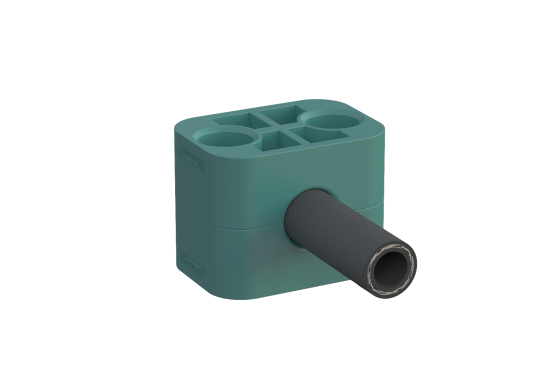
Introduction to hose clamps
Hose clamps are used to securely guide and fix flexible hose lines in machines, systems and vehicles. Unlike pipelines, hoses regularly change their outer diameter during operation, for example due to pulsations or changing pressure loads. In addition, movements, vibrations and bending radii can occur, which must be taken into account when selecting the right hose clamp.
A suitable hose clamp holds the hose securely in position, but at the same time allows defined movements. This prevents damage to the hose sheath, chafing or kinks and has a positive effect on the service life of the hose line.
Our first choice: hose clamps from the standard series (H version)
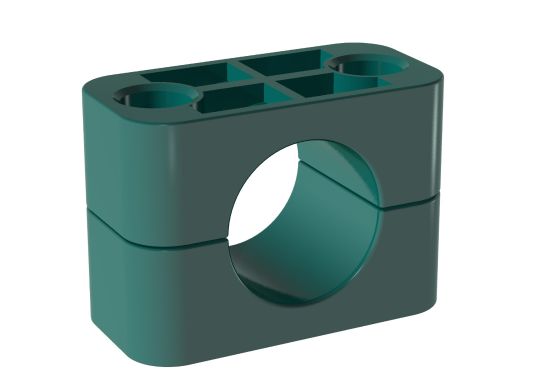
STAUFF hose clamps from the standard series in accordance with DIN 3015 (Part 1) in a special H design ("Hose") have proven to be particularly suitable for fastening hose lines. They are based on a long-established technology and are designed for use in industrial and mobile hydraulic applications.
H-design clamp bodies have hose-specific properties:
No preload when tightening the screws, so that the hose is guided loosely and not clamped tightly
Smooth inner surfaces without internal ribs to reduce the risk of abrasion and chafing
Round outlet radii that minimise damage caused by kinking or edge contact
This design allows the hose to move and compensates for changes in the outer diameter of the hose, for example in the event of pressure fluctuations or pulsations. In many applications, it is recommended that the inner diameter of the hose clamp is slightly larger than the outer diameter of the hose to ensure this loose guidance.
Selecting the right clamp body for hose lines
When selecting the clamp body for hose clamps, the focus is on protecting the hose line. In contrast to pipe fastenings, the aim is not to clamp the hose tightly, but to guide it in a controlled manner.
Clamp bodies from the standard H series are suitable for most applications. Variants with elastomer inserts are also available for particularly sensitive hose lines or for additional damping. These have a rubber insert in the clamp body, which additionally cushions and protects the contact between the hose and clamp. Assembly and accessories for hose clamps
Installation and fastening accessories
Hose clamps are generally subject to lower mechanical loads than pipe clamps. This has a positive effect on installation and opens up flexible fastening options.
Depending on the application, hose clamps can:
can be screwed directly to the system,
be mounted on a welding plate or
can be used in combination with mounting rails and rail nuts.
In many cases, cover plates can be dispensed with. Instead, hexagon socket screws are used to securely screw the clamp halves together. This simplified assembly is particularly advantageous when hose lines have to be changed regularly and quick and easy removal and installation is required.
Areas of application
STAUFF hose clamps are used wherever flexible hose lines need to be routed securely. Typical areas of application include mechanical and plant engineering, industrial hydraulics and mobile applications.
Hose clamps are particularly effective when it comes to pulsating pressures, changing loads and moving lines. They ensure structured line routing, reduce mechanical loads on the hose jacket and support a durable, maintenance-friendly system design.
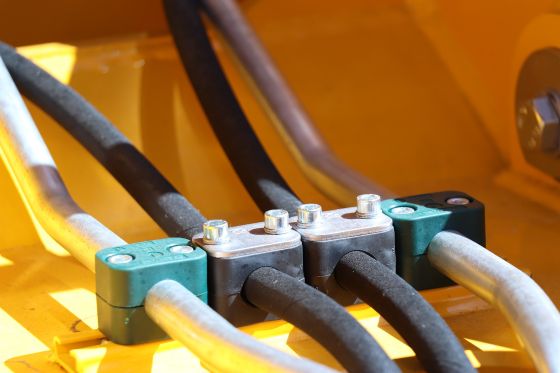
Other hose clamps in our range - an overview
Other hose clamp variants are available for applications in which the classic hose clamp from the standard series is not sufficient. These have been developed for special requirements or supplement the modular STAUFF system.
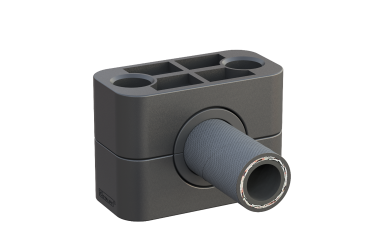
NRC-H
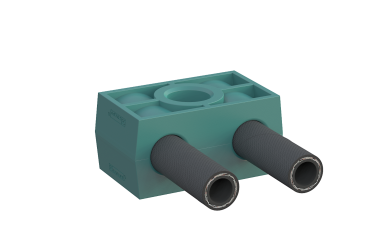
Double series
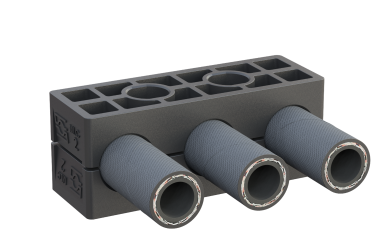
Multi-Line clamps MLC
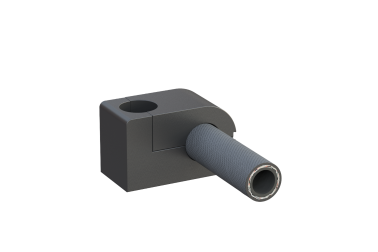
Light series LBBU / LB / LN
NRC-H
Double series
Multi-Line clamps MLC
Light series LBBU / LB / LN
NRC-H
Double series
Multi-Line clamps MLC
Light series LBBU / LB / LN
NRC-H
Double series
Hose clamps in the double series allow several hose lines to be fastened in parallel with a defined distance between them. They are suitable for applications in which several hoses need to be routed clearly, compactly and yet already. The modular system supports structured cable routing, even with complex system layouts.
Multi-Line clamps MLC
Multi-line clamps (MLC) were developed for routing several hose lines together. They enable space-saving and clear installation and help to bundle hose lines neatly without restricting ease of maintenance.
Light series LBBU / LB / LN
The lightweight LBBU, LB and LN series are designed for applications with lower mechanical requirements. They offer an economical solution for the secure fastening of hose lines when low weight, simple installation and functional fastening are the main requirements.
Helpful links and technical information
You can buy STAUFF hose clamps quickly and easily directly from our own online shop. Additional technical details can be found in the product catalogue. We also offer a large database for CAD models of our clamps. So you can always find exactly what you need.
STAUFF online flip catalogue
View all STAUFF clamps in the catalogue
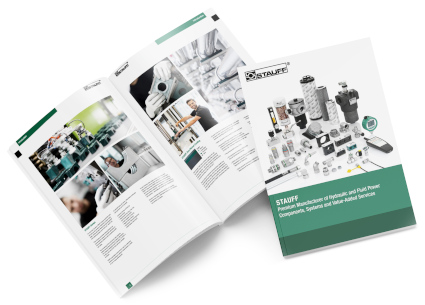
STAUFF Online Page-Flip Content
Navigate and search content, forward via email, print, and download in PDF format
Open catalogue in new tab
Buy hose clamps now
Whether as part of an existing system or for a new project: STAUFF hose clamps provide you with reliable solutions for routing hose lines safely and already. The modular system supports standardised assembly processes, reduces the number of variants and simplifies maintenance and servicing.
Frequently asked questions about hose clamps
What is the difference between hose clamps and pipe clamps?
Hose clamps are designed for the special properties of flexible hose lines. They guide the hose loosely and allow movement and diameter changes instead of clamping it tightly.
What does H-design mean for hose clamps?
The H version refers to clamp bodies without pretensioning with smooth inner surfaces and round outlet radii, which have been specially developed to guide hose lines already.
When are hose clamps with elastomer inserts useful?
An elastomer insert is suitable for particularly sensitive hoses or applications where additional cushioning and protection are required.
What are NRC-H hose clamps used for?
NRC-H hose clamps are used where multi-spiral hoses are subject to particular stress due to micro-vibrations and where increased protection of the hose jacket is required.
Do hose clamps always have to be fitted with cover plates?
In many applications, a cover plate is not required, as hose clamps are often subjected to lower loads than pipe clamps.
What advantages do STAUFF hose clamps offer for maintenance work?
Thanks to their simple assembly and disassembly, STAUFF hose clamps are particularly suitable for applications with regular hose changes.