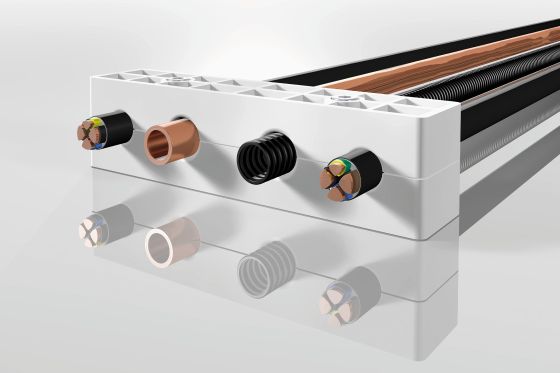
Why non-flammability alone is not enough
Non-flammability alone does not provide adequate protection in the event of a fire, as the greatest risks often stem not from the flames themselves, but from smoke development, reduced visibility and toxic fire gases. A material may be difficult to ignite (favourable ignition behaviour) and yet still pose significant risks to people, plant and infrastructure in an emergency.
Comprehensive fire safety must therefore go beyond traditional flammability assessments. What matters is how a Seal Material behaves under real-world fire conditions: how much smoke is produced? Which gases are released? And what impact does this have on evacuation times, escape routes, rescue operations and adjacent systems?
Flammability assessment of plastics
Assessments such as the UL 94 classification provide important insights into how a material behaves when exposed to an open flame. However, they do not take into account smoke generation or the composition of fire gases and therefore only reflect part of the actual risk.
Find out more about the UL 94 classification in our related article:
Smoke production as a critical risk factor in the event of a fire
Smoke is often the greatest immediate danger in the event of a fire. Even just a few breaths of smoke can be harmful to health. Thick plumes of smoke severely restrict visibility, making it difficult to find one’s bearings.
Particularly in industrial plants, data centres, engine rooms or enclosed systems – such as passenger compartments – smoke can spread rapidly and lead to critical situations. The consequences are manifold:
restricted visibility and difficulty in finding one’s bearings
delayed evacuation
increased risk of accidents during evacuation
more difficult operating conditions for emergency services
failure of sensitive electronic equipment or servers
Materials with low smoke emission therefore make a significant contribution to safety. They improve visibility and reduce the immediate danger to people in the vicinity of a fire.
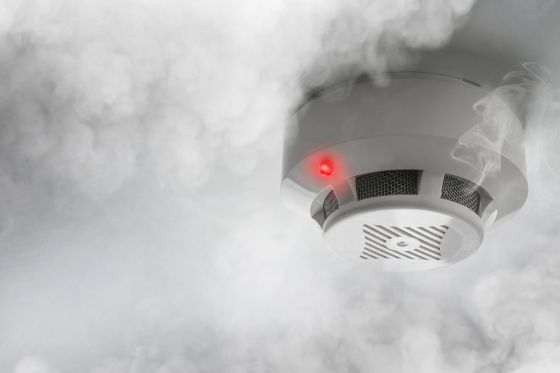
Toxicity of plastics in the event of a fire
In addition to the volume of smoke, the composition of the gases released plays a key role. Many plastics can release substances that are hazardous to health or corrosive in the event of a fire, endangering both people and technical systems.
Halogen-containing materials are particularly relevant. Upon thermal decomposition, they can form aggressive compounds that:
damage the respiratory tract
cause long-term health effects
corrode electronic components and equipment
The choice of seal material therefore affects not only personal safety but also the operational integrity of entire infrastructures. The targeted selection of suitable seal materials is therefore an essential component of modern fire safety concepts.
Comprehensive fire protection with LSZH materials
A consistent approach to fire protection takes into account both smoke production and toxicity. This is precisely where LSZH seal materials come into play. LSZH stands for ‘Low Smoke Zero Halogen’ and describes seal materials that produce only small amounts of smoke and do not release any halogen-containing gases in the event of a fire.
These properties help to specifically reduce the key risks associated with a fire.
In practical terms, for industrial applications, this means that materials must not only be flame-retardant but must also pose a calculable risk in the event of a fire. In areas such as passenger trains, particularly double-decker carriages, simulation systems are used to assess flame and smoke spread. LSZH materials are particularly advantageous as they do not further impair visibility or compromise the safety of people and equipment.
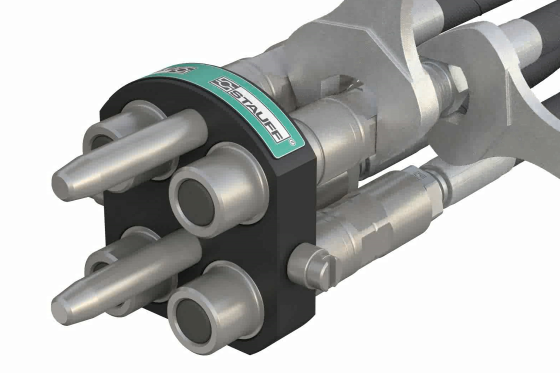
An example of this holistic approach is STAUFF clamps made from PA-V0, which, in addition to meeting the flammability classification according to UL 94 or specific regulations such as EN 45545-2, also fulfil LSZH properties.
They thus combine several safety-related requirements in a single component:
controlled behaviour when exposed to flames
reduced smoke emission
No halogen-containing components
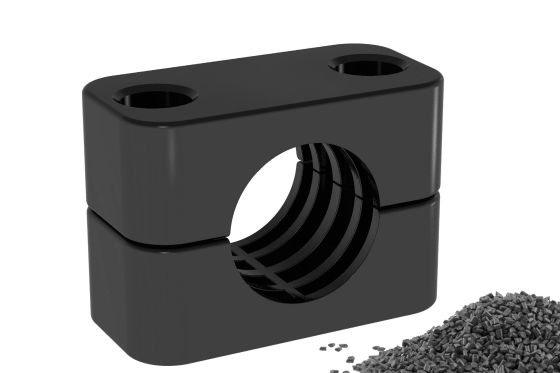
In doing so, they demonstrate how modern fire safety requirements can be put into practice – not by focusing on individual performance parameters in isolation, but through the combination of several material properties.
Significance for industrial applications
In industrial environments such as data centres, numerous plastic components are used in safety-critical areas. These include fasteners such as pipe, hose and cable clamps, which are often installed in the immediate vicinity of cables, machinery or potential sources of danger.
It is precisely here that the importance of material selection becomes apparent: components must not only fulfil their mechanical function but also react safely in the event of a fire.
STAUFF clamps made from PAV0 are an example of how these requirements can be met in practice. Thanks to the combination of a high flammability classification and LSZH properties, they help to specifically minimise both the outbreak and the effects of a fire.
They therefore help to ensure the safety of:
people within the facility
technical systems and infrastructure
operational processes and availability
Even comparatively small components can therefore play a crucial role within the overall system. A holistic approach to fire protection therefore consistently takes into account all materials used and their behaviour in the event of an emergency.
FAQs
What does ‘non-flammability’ mean in relation to plastics in fire safety?
Non-flammability describes a material’s behaviour in response to an ignition source. It indicates how easily a plastic ignites or how quickly it self-extinguishes once the flame is removed; however, it does not take into account smoke production or the toxicity of the gases produced.
Why is smoke production often more dangerous than flames in the event of a fire?
Smoke spreads rapidly, restricts visibility and can be harmful to health even in low concentrations. This makes it difficult to find one’s bearings and delays evacuation, which significantly increases the risk to people.
What risks do toxic fire gases from plastics pose?
Toxic combustion gases can damage the respiratory tract, cause long-term health effects and, in addition, impair technical systems through corrosive effects.
What are LSZH materials and what advantages do they offer?
LSZH materials produce little smoke in the event of a fire and do not release halogen-containing gases. This reduces both visibility impairment and health and technical risks.
Why is a holistic approach to fire protection important in industrial applications?
Industrial systems consist of many interconnected components. A holistic approach to fire protection ensures that, in the event of a fire, all materials react as safely as possible and do not pose any additional risks to people or equipment.
Which fire safety standards can be met by STAUFF products?
STAUFF products, in particular STAUFF pipe clamps, can meet the requirements of a wide variety of industries and applications on request.
The range of materials allows us to supply products for the following areas:
UL94
EN 45545-2
NFPA 130
We would be happy to assess your specific fire safety requirements.

Newsletter Sign-up
Sign up now and never miss another post!